
Branding · Practical guide
Branding for Small Businesses in Nigeria: What You Need Beyond a Logo
By ALL-CREATIVES HUB LIMITED4 min read
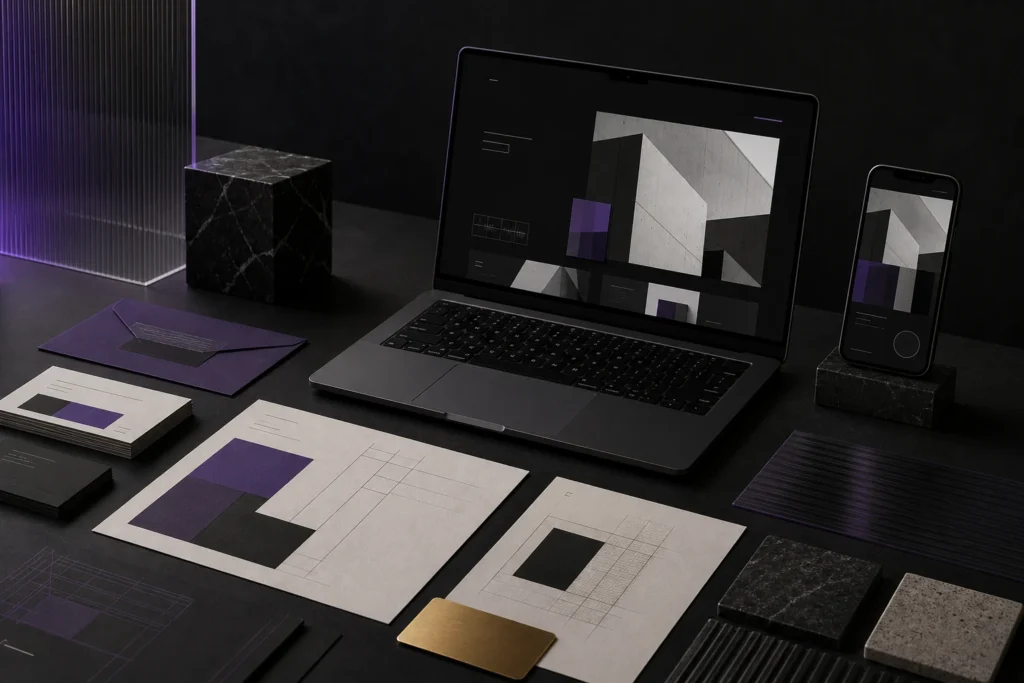
Your business may have an excellent product or service, yet still struggle to explain its value clearly.
Perhaps your Instagram page feels different from your website. Your proposals use different colours every time. Customers recognize your logo but cannot explain what makes your business a suitable choice.
These are branding problems that a new logo alone may not solve.
Branding for small businesses in Nigeria starts with clarity: what you offer, who you serve, and how you want customers to understand your business. Visual design gives that clarity a recognizable form.
Define what you want to be known for
Before discussing colours or typography, answer three questions:
- Who is your primary customer?
- What problem do you help that customer solve?
- What can you credibly offer that matters to their decision?
Be specific. “Quality services for everyone” gives a designer very little direction and gives customers little reason to remember you.
A catering business serving corporate events, for example, may build its positioning around organized delivery and a consistent guest experience. A furniture business may focus on adaptable pieces for compact homes.
A useful working statement is:
“We help [a specific audience] achieve [a relevant outcome] through [our product or service].”
You do not have to publish that sentence. Use it to guide your messaging and design choices.
Understand the difference between your logo and your identity
Your logo is one element of your visual identity.
A usable identity also includes colour choices, typography, image direction, layout principles, and rules for applying those elements across different formats.
Consider where your business appears: a website header, social profile, invoice, presentation, packaging, or signboard. Your identity needs to work in each relevant setting.
Ask to review the proposed design at realistic sizes and in practical applications. A detailed mark that looks impressive on a presentation slide may become unclear as a small profile image.
You should also understand which logo versions to use on light backgrounds, dark backgrounds, and single-colour materials.
Develop messaging that customers can understand
Visual consistency is useful, but your words need the same attention.
Your business should have a clear description, concise service summaries, and a consistent way of explaining its value. These become the foundation for website copy, social media profiles, proposals, and sales conversations.
Avoid relying on claims such as “the best” or “world-class” without supporting evidence. Explain the service and the customer benefit in concrete terms.
For example, “We design product packaging for food businesses preparing for retail” tells a prospective client much more than “We deliver exceptional creative solutions.”
Where available, strengthen your messaging with genuine work samples, approved testimonials, and specific descriptions of your process.
Design for the materials you use every week
A brand identity becomes useful when your team can apply it.
List the materials that appear most often in your customer journey. These may include:
- Social media graphics.
- Proposals and company profiles.
- Presentations.
- Business cards and email signatures.
- Product labels and packaging.
- Website pages and digital advertisements.
Prioritize the formats your business actually uses. A service company that wins work through proposals may benefit more from a strong proposal template than a large collection of merchandise mockups.
Templates should be editable by the people responsible for everyday communication. Agree on suitable tools and file formats before the work is finalized.
Create guidelines that make decisions easier
Brand guidelines should help someone produce consistent work without guessing.
For a small business, a concise guide may be sufficient if it explains logo use, colour values, typography, spacing, image style, and a few examples of correct application.
Include practical details. Which font should staff use when the main brand font is unavailable? How should a partner’s logo appear alongside yours? What happens when a design needs a plain white background?
Where fonts, photographs, or other assets require licences, clarify the relevant usage rights and responsibilities.
Useful guidelines reduce the number of small design decisions your team has to repeat.
Connect your brand across physical and digital spaces
Customers may encounter your business in several places before making contact.
They might see an Instagram post, visit your website, receive a proposal, and later enter your office or shop. Those experiences should feel connected.
Consistency does not require every item to have the same layout. It requires recognizable choices in typography, colour, imagery, language, and presentation.
For a business with a physical location, signage and interiors can reinforce the identity. For a digital service, the website and enquiry experience may carry more of that responsibility.
Choose a branding scope that fits your stage
A new business may need a focused identity and a small set of essential materials. An established company may need an audit of what already works before making changes.
Before appointing a creative partner, confirm the deliverables, revision process, final file formats, ownership terms, and rollout priorities.
A strong brief helps the agency design for your business needs and helps you assess whether the result solves the original problem.
Ready to create a more consistent business identity? ALL-CREATIVES HUB LIMITED provides branding and graphic design services in Lagos, with complementary expertise in websites and physical spaces. Share your business goals, audience, and current materials to discuss the right scope.
Space + Brand + Digital
Keep exploring.

Interior Design
From the first brief to handover: plan an office that supports your team, expresses your brand and works within your budget.

Digital
Set a clear purpose, organize useful content and plan a mobile experience that makes it easier for customers to enquire.